WHY DID YOU COME TO JAPAN?

…SERENITY

Left Kanji
Kanji Image
Left Kanji
Kanji Image

I am Nader Sammouri—architect, writer, and tour guide. I have lived in Japan as a foreigner for nearly a decade. When people ask what brought me here, I usually begin with the visible reasons: Japan’s refined aesthetic sensibility, its deep respect for discipline, and its quiet sense of honor. Over time, however, I have realized that these explanations only touch the surface. What truly drew me here was something more subtle—a spiritual pull shaped by Shinto-influenced restraint and a non-arrogant, attentive relationship with nature. Japan does not insist on being admired; it invites calm. And in that calm, I found a reason to remain.

I would like to share these reflections in the hope that they offer a quiet insight into Japan’s culture, aesthetics, and underlying philosophies, experienced through privately guided tours.

Kanji Image

90+ Published Articles - 7 Countries

I have written over 90 articles about Japan, published across seven countries in English, focusing on design, philosophy, psychology, and culture.

I read widely, and writing is a way for me to complete the conversation. Reading feeds me; writing is how I respond.

  • Japan (The Japan Times, Aoyama Design Forum)

  • Australia (The Local Project)

  • United Arab Emirates (Fast Company, Round City)

  • Netherlands (Frame)

  • China (LWK+ Partners)

  • Saudi Arabia (Arab News, Arab News Japan)

  • United States (Stanford Social Innovation Review, House Digest)
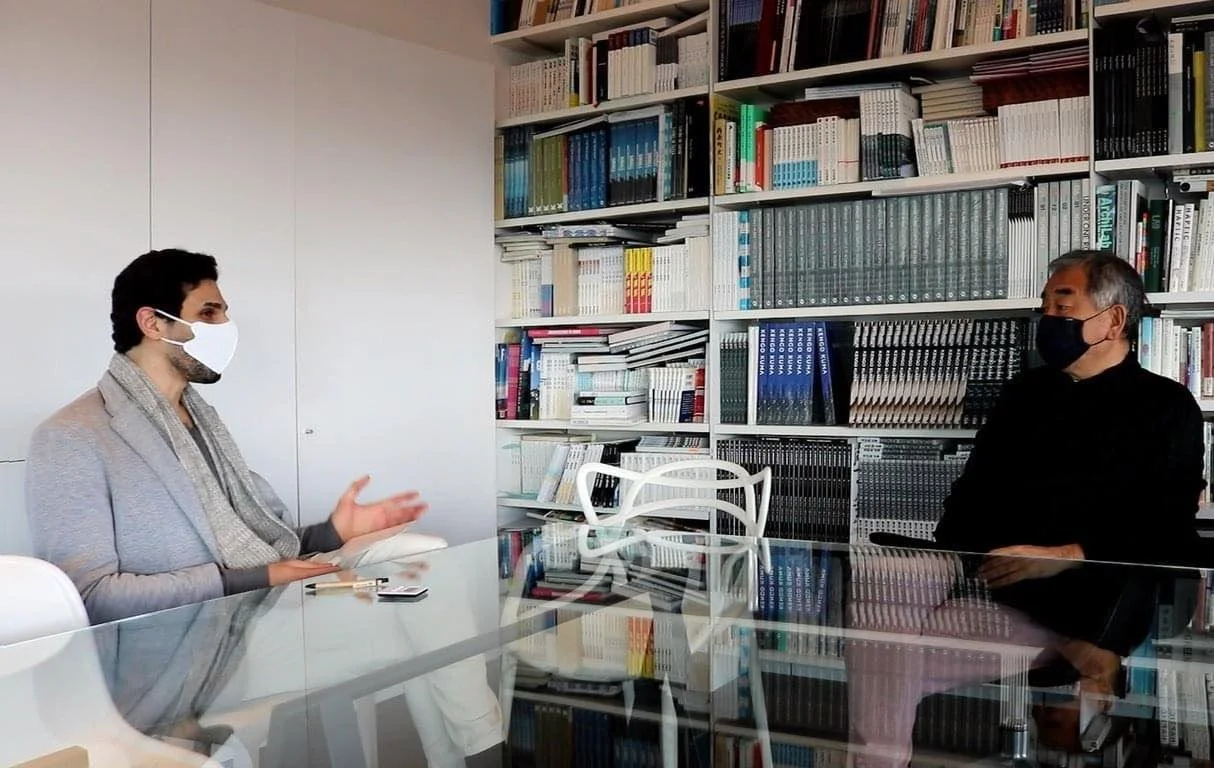
Two men wearing face masks sitting at a glass table in a room with a large bookshelf filled with books in the background, engaging in conversation.

An interview with star architect Kengo Kuma at his Tokyo studio
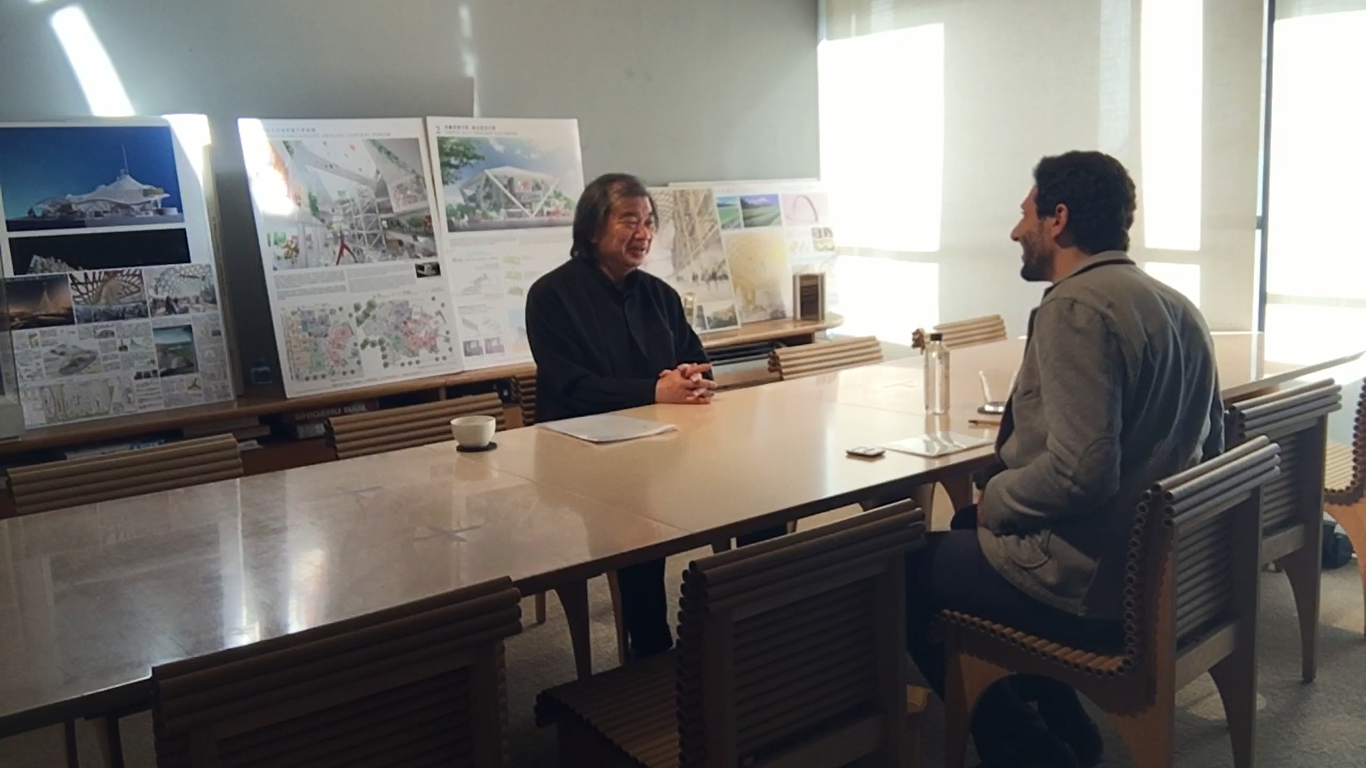
Two men sitting across from each other at a conference table in a room with display boards and architectural plans in the background, engaging in conversation.

A conversation with star architect Shigeru Ban at his office in Tokyo

A man is sitting at a table in front of a laptop, engaging in a video call, with a third person visible on the laptop screen. The man has dark hair and a beard, and is wearing a light-colored blazer over a dark shirt. There is a glass of water and a white device on the table.

An online interview with star architect Sou Fujimoto

Sixth Annual Kyoto Writing Competition Honorable Mention

Received an Honorable Mention in the Sixth Annual Kyoto Writing Competition, hosted by Writers in Kyoto, for the piece “Soul.”
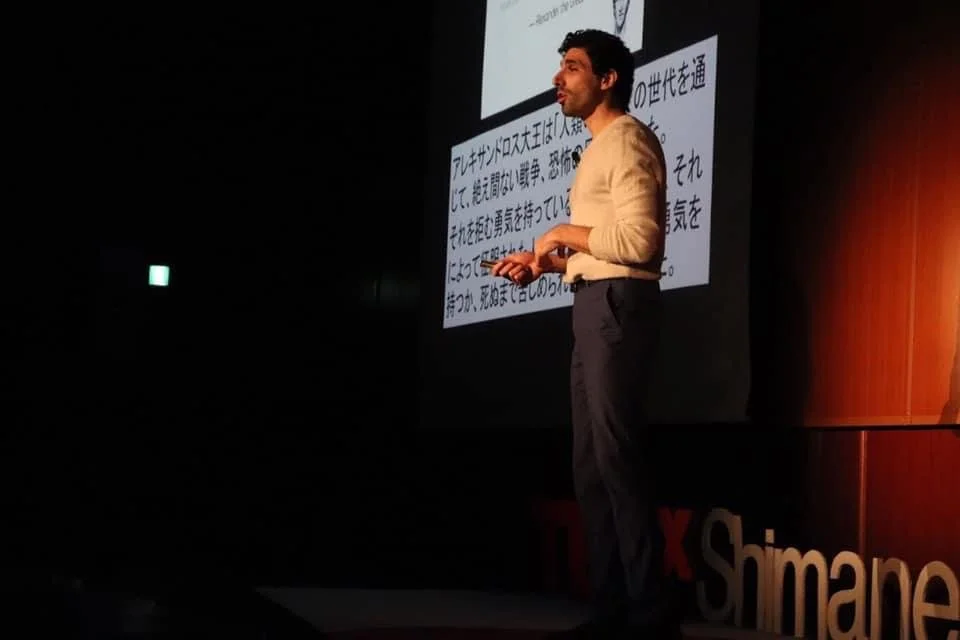
TEDx ShimaneU, Japan

I had the honor of delivering a TEDx talk in Matsue, Shimane Prefecture, Japan, exploring philosophical reflections. A moment I still smile about happened during the mandatory rehearsal the day before. As I practiced on stage, I was using my hands quite expressively, and one of the organizers gently asked if I could be “less aggressive” with my gestures. It was a small but memorable reminder of Japan’s softer, more restrained approach to communication—something I still find myself learning and adjusting to.
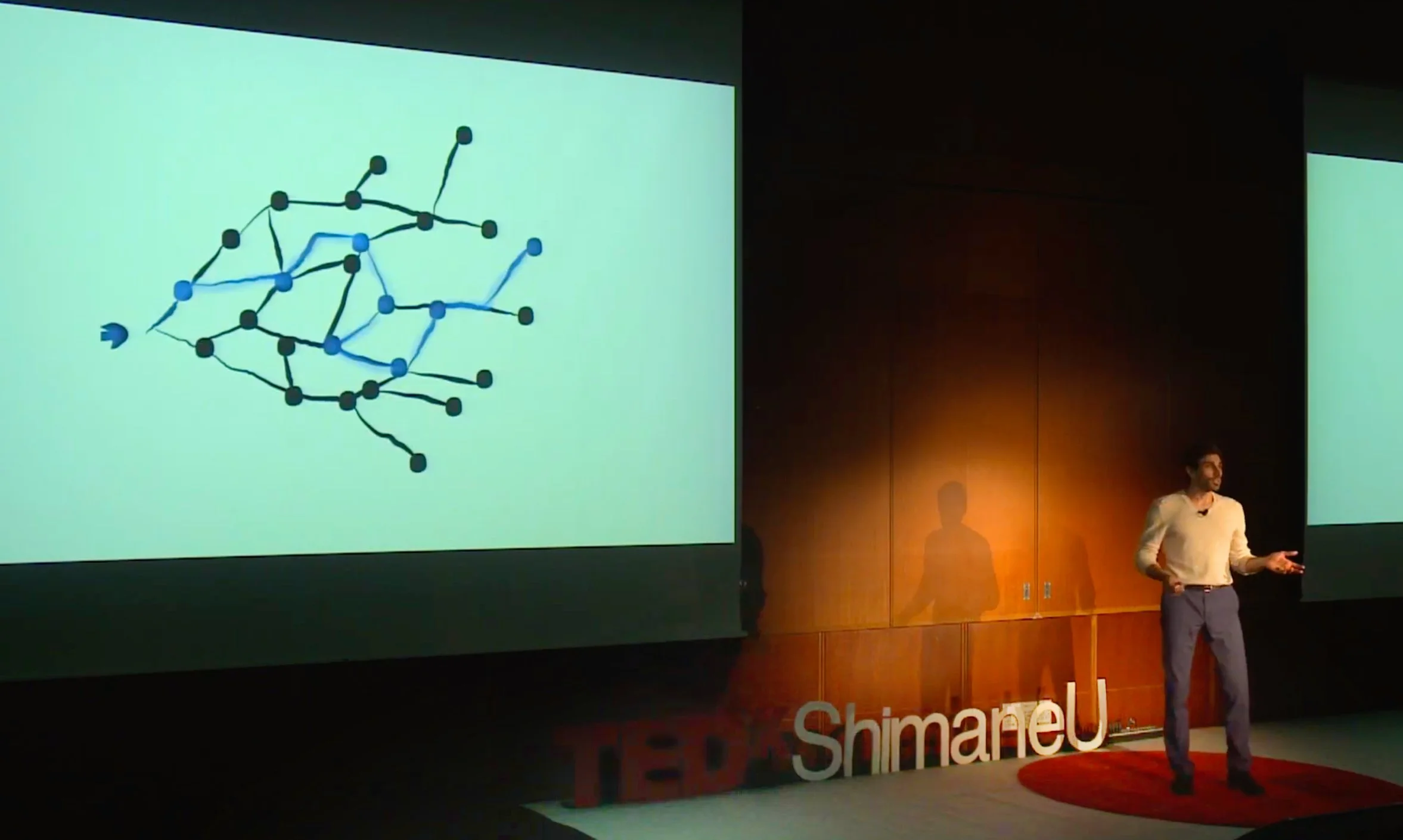
A male speaker presenting at a TEDxShimaneU event, with a large screen behind him displaying a diagram of interconnected nodes.

Discussing Connections at TEDx ShimaneU

A person performing on stage with a microphone, facing an audience in a dimly lit room. A projected slide with Japanese lanterns and annotations about courage and fear is visible behind them.

A Pecha Kucha Talk in Kyoto About Obsession
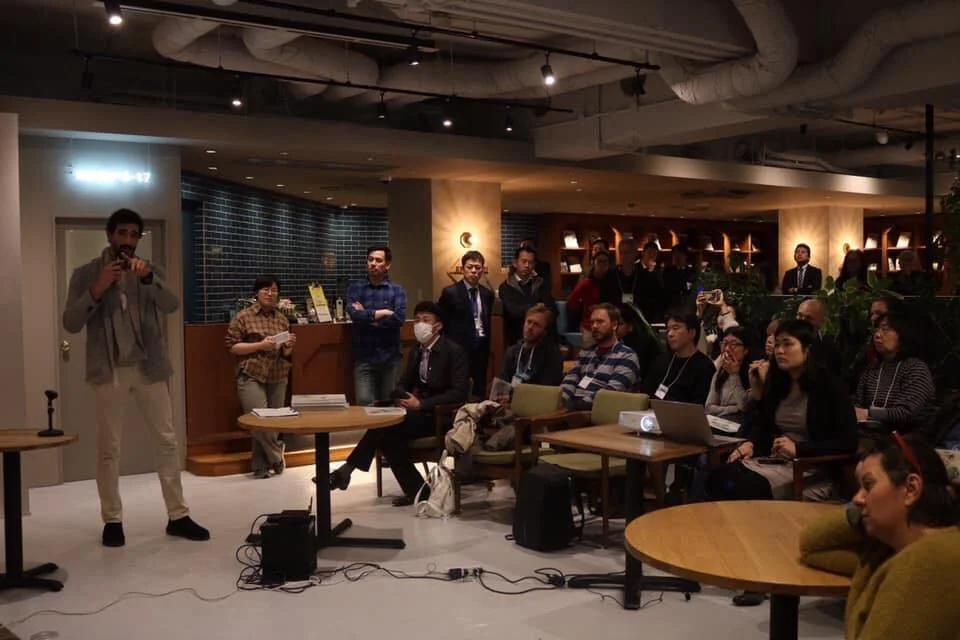
A man standing on the left is speaking into a microphone to an audience seated in a modern, dimly lit room, with a projector on a table in front of him, and several attendees taking notes or recording.

A Presentation for Kyoto International Entrepreneur Community

Guided 300+ Private Tours in Japan

Over the years, I have guided more than 300 private tours—primarily in Kyoto, as well as in Nara, Himeji, and Osaka—welcoming travelers from over 20 countries, including The Netherlands, Singapore, Belgium, Austria, KSA, Switzerland, New Zealand, Italy, Canada, United Kingdom, Greece, France, Spain, the United States, Germany, and Australia.

Selected Quotes from Books I’ve Read About Japan

  • "The introduction of a new Buddhist school, called Zen, or the Meditative School, increased the religious confusion. Zen was a simple method of training intuitive insight by the practice of meditation) which aimed at revealing the primordial purity of the cosmic soul in each individual soul."

    — Nichiren (by Masaharu Anesaki)

  • "...Yet it is safe to say that Shinto does not have any lasting or profound tradition of sculpted images or statues in human form. It is true that people make their ceremonies by facing the sanctuary of the shrine or the rock, which is called iwakura, or rock seat. This does not necessarily mean they are worshipping either the shrine or the rock itself, and that they treat them as icons. They are merely places where the worshiper finds spiritual inspiration and so journeys from one level of reality to another, experiencing a true connection with Kami."

    — The Essence of Shinto (by Motohisa Yamakage)

  • "...Culture always lives in connection or contention with the power of the day, whether military, economic, political, or populist, serving to add luster or distract. Power desires aesthetics as a sensory polish to erase the impurities and poisons ensuing from that power."

    — Designing Japan (by Kenya Hara)

  • "...The habit of enjoying things first with the eyes is an integral part of the Japanese lifestyle. And it is something that foreign visitors will inadvertently imitate, even for the first time, on seeing a Japanese gaze at his or her food before lifting the chopsticks. Once more, what is the source of this disposition toward creating scenery even in a lunchbox?"

    — The Aesthetics of the Japanese Lunchbox (by Kenji Ekuan)

  • "...Our conscious mind is but the tip of the psychological iceberg, so to speak, and beneath this surface consciousness, there lies a hidden depth which is always already connected to the cosmos."

    — On Buddhism (by Keiji Nishitani)

  • "...A basic principle of Japanese gardening is miniaturization in which elements such as rocks and ponds are used to represent large-scale landscapes. Related to minia- turization is the use of various techniques to make spaces appear larger than they really are. One of these techniques is altered perspective. For example, if rocks and trees in the foreground are larger than those in the background, the result is an illusion of distance."

    — The Art of the Japanese Garden (by David & Michiko Young)

  • "In the West, philosophy and religion occupy two different arenas: while philosophy is a human en- terprise involving the intellect and reason, religion is a matter of faith and practice in the light of revelation. In one sense, Western intellectual history is a process of opposition, conflict, and synthesis between philosophy and religion, reason and faith... In India, China, and Japan, on the other hand, philosophy and religion are originally undifferentiated and inseparable."

    — An Inquiry into the Good (by Kitaro Nishida)

  • "...Wabi-sabi is ambivalent about separating beauty from non-beauty or ugliness. The beauty of wabi-sabi is, in one respect, the condition of coming to terms with what you consider ugly."

    — Wabi-Sabi (by Leonard Koren)

  • "...Nature is always transforming itself and its innate strength is far more powerful than we can imagine. Rocks, moss and fall- en leaves turn to soil over a long passage of time. The color of tree bark fades and then is reborn as new the water in a pond is a clear blue. What we receive from nature is a blessing; we can immerse ourselves in something that cannot possibly be matched by human artifice."

    — White (by Kenya Hara)

  • "...Even in civilian situations Japanese authorities took literally the dominance of spirit over material circumstances. Were people fatigued by twelve-hour work in the factories and all- night bombings? The heavier our bodies, the higher our will, our spirit, rises above them. The wearier we are, the more splendid the training."

    — The Chrysanthemum and the Sword (by Ruth Benedict)

  • "...Samurai warriors treated indulgence as a diversion that weakened their moral strength and broke the strict mental and physical routines vital for combat. By shunning comforts, they stayed sharp and adaptable when the unexpected arose. This outlook mirrors Buddhist teachings that link attachment to sensual enjoyment with(dukkha-the suffering born from desire.) Pleasure itself isn't condemned, but craving it and mistaking it for something lasting-leads to discontent."

    — Dokkodo (by Miyamoto Musashi)

  • "...When Buddhism was introduced to Japan in the 6th century, Japanese people did not abandon their faith in Shinto even though Buddhism spread rapidly and became a major influence in Japanese society. Instead, what manifested was the syncretization of Shinto and Buddhism, to form a unique religion. Thus, the ideology of Shinto goes beyond standard religious dogma, and its principles coexist and are tolerant of other ideas and views."

    — Shinto Shrines (by Kato Kenji)

  • "...To express it another way, we can look at the human body in terms of two separate halves: from the waist up and from the waist down. In the top half of the body all of our senses and our thinking abilities are located; the nature of the top half of the body is to perceive things. The bottom half of the body, from the waist down, is the center of our life energy; the nature of the bottom half of the body is to be active and energetic."

    — How to do Zazen (by Shodo harada)